Remember to Reboot Yourself

Remember the times when you relive an upsetting situation in your mind or when you describe it to a friend. The never ending “He/She said and I said” interactions. By replaying the dialogue, the emotions come back and you become angry and upset.

Although this event has already occurred, you still think what witty answers you could have given or how it would have felt if you had said the things you didn’t dare to say. The more you think about it, the more forceful your emotions become. Instead of trying to figure out what to do differently next time to address the situation more effectively, you fall into the trap in defending yourself to yourself.

The mental downward spiral continues and there is no easy way out. These are the situations where you need to reboot yourself. It is similar to what we do with computers; we just press re-start when there is a problem.

Also, think of a gesture like clenching your fist or blinking your eyes to give a signal to your mind that the rebooting is about to start. This a small but powerful mental trick that can help you to trigger the process and re-balance.

Reboot

When you are in a downward spiral, remember to reboot yourself

If you catch yourself still dwelling on the same topic, reboot again. The positive thing is that you are already aware of your unhelpful thoughts. The more you practice to neutralize them, the more effective you will become. (For the cynics around us: If your aim is to prove that this technique doesn’t work, you will most certainly succeed.)

The bottom line: Next time you realize that you have given free rein to your emotions and you need to get back control, think of rebooting yourself.


Korina Karampela is the founder of b4iapply. She passionately believes in empowering people to  make informed decisions about their career and their finances. She is a senior executive in the pharmaceutical industry and has an MBA from MIT Sloan. In her limited spare time, she wants to join forces with others to help everybody to be a better version of themselves.

 

Posted in b4iapply, Coaching, Self development | Tagged , , , | Leave a comment

Is there a future for higher education?

There is so much discussion about how to ‘fix’ higher education. Most proposed solutions are based on individuals’ personal past experiences; hardly the best way to address a topic that will evolve in 5 -10 years in an unprecedented way.

At least now we accept that it is difficult to define the impact of artificial intelligence and technological advancements to the job market. Still though we remain romantic about the importance of higher education at any cost.

digital age

Those with a university degree have higher earnings than those who don’t have one, the data suggest. This statement was true in the past. However, in many countries, the price premiums of these degrees have increased considerably during the last years. Also, the demand for the jobs is higher than the supply. When these parameters are taken into consideration, the reality might be different.

Some advocate about the value of internships as an alternative to the almost only option that currently exists for young people (i.e. universities). The reaction to this proposal is visceral. It is easily labelled as an attempt to reduce social mobility.  People still believe that it is better to have a university degree, a large enough debt and a low paid job rather than… Internships might be an option for some in the short-term. It is not though the solution of the bigger problem of the future of higher education.

Higher education is discussed like it is the end of the journey, although it is only the beginning. Even those who have been in employment for some years, they need to consider how they will up-skill or re-train themselves in order to continue to be relevant and employable. Life-long learning will become a must.

The model of the higher education (at least in its current form) needs to be adjusted to the new reality.

I personally don’t expect politicians to take a meaningful stand on this because there is a lot at stake (primarily their re-election). .

I don’t expect the universities to take the lead either. They have so many vested interests in the current status quo.

At the same time, the big corporations (which already now clearly state that they cannot find skilled employees) are not necessarily trusted.

So, who is best suited to prepare the society for the new norm?

Or is it more convenient to adopt the lets-kick-the-can approach?

Or maybe the change will come from the grassroots…

The bottom line: Technological advancements and artificial intelligence will change the landscape of employment and higher education. It is unclear though how the society needs to get prepared for the new norm.

I would be interested in hearing your thoughts. This problem will not get away. At some point, we will have to face it. Your views might help shape the response.

Korina Karampela is the founder of b4iapply. She passionately believes in empowering people to  make informed decisions about their career and their finances. She is a senior executive in the pharmaceutical industry and has an MBA from MIT Sloan. In her limited spare time, she wants to join forces with others to help everybody to be a better version of themselves.

Posted in b4iapply, b4iapply to uni, Career Advice, Higher Education | Tagged , , , | Leave a comment

Is ‘Good Enough’ What You Should Strive For?

In a relentless competitive environment, people get overworked; they get involved in many initiatives, their calendar is full with meetings, and the beeping from the incoming emails goes on constantly.

In order to cope, the concept of ‘good enough to proceed‘ has gained momentum. It definitely helps with crossing things from our long ‘to do’ list. Does it result though in our superior performance? Do we end up getting better at specific skill?

“Not necessarily” would be my answer.

The general saying  that ‘practice makes you better’ does NOT hold true. We become better only with deliberate practice. 

Just doing the same thing frequently doesn’t result in becoming an expert. Think about your driving skills. After a while, although you become more comfortable,  the performance reaches a plateau – unless you consciously and intentionally make an effort to improve.

On the other side, is it realistic to always strive for superior results?

We all live very busy lives both professionally and personally. Most of the time, we barely manage to keep it together. Does it make sense to impose ourselves higher standards?

There are reasonable arguments for both positions. Maybe the best way forward is somewhere in between.

My advice is: be selective on where to focus your energy, effort and time.

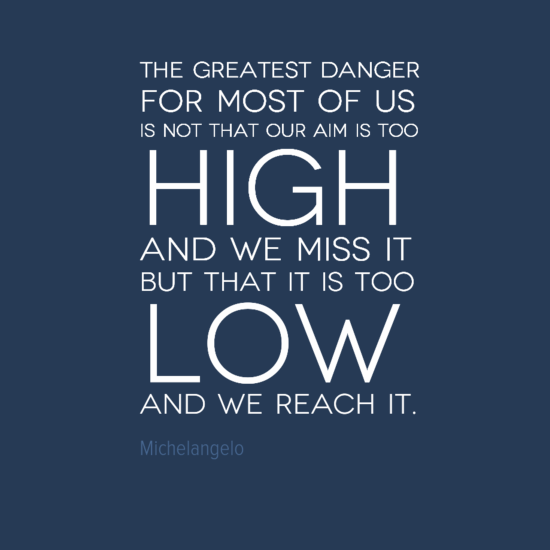
Identify one or two areas critical for your work and/or your career development and focus on becoming an expert on them. Don’t accept ‘good enough’ standards on these areas. Make a conscious effort to continuously raise them. Small incremental improvements will eventually have a big impact.

Michelangelo-Quote

Don’t be afraid to ask for feedback. Experienced people can provide you with invaluable insights during this journey.

Be patient. It takes time to move from ‘good enough’ to  become an expert. Focus on what you can control. Monitor results but don’t get disappointed if you don’t see the incremental gains immediately.  Remember ‘deliberate practice makes you better.’ Invest time and effort to hone the skills you selected. Persistence is crucial. Do your part of the deal.

You may have noticed that I avoid using the word perfection. Philosophically, I don’t believe that this state is attainable. Hence, I find it more realistic to talk about striving to become better than perfect. But you may have a different view. Whatever motivates you.

The bottom line: Don’t accept ‘good enough’ standards. Identify the skills you want to hone and do your part of the deal.

Korina Karampela is the founder of b4iapply. She passionately believes in empowering people to  make informed decisions about their career and their finances. She is a senior executive in the pharmaceutical industry and has an MBA from MIT Sloan. In her limited spare time, she wants to join forces with others to help everybody to be a better version of themselves.
Posted in b4iapply, Career Advice, Coaching, Personal development, Professional development, Uncategorized | Tagged , , | Leave a comment

Don’t Give Feedback – Ask for It

I wanted to give some feedback to a colleague since some team members made me aware of a recent situation that was far from optimal.  I thought it was a good opportunity for coaching. When I raised it with the person in question, I got a long and emotional monologue defending the way she handled the situation.

Do you find this example familiar?

It shows that there is a fundamental problem with the current feedback model; its success depends on whether the recipient is open to receive it

If we start seeing feedback as a vehicle to improve our performance, we may be more open to it. The rewards from the so-called ‘growth mindset’ can be significant.

Think of professional athletes. They have coaches who constantly analyse every little thing they do in order to find ways to improve their performance. We hear in the news that Novak Djokovic will get Andre Agassi as a coach and it sounds perfectly normal. Same thing with senior business people. They have experienced coaches to help them address their development areas.

It seems though that this mentality is less prominent in middle management.

It is of course impossible for any company to hire an external coach for each employee. However, another way to achieve a similar result without any additional cost is to create a community where we help each other to fulfil our potential. Imagine how successful a company that has a ‘growth mindset’ culture can be.

How can this be achieved?

A simple change of the model can yield great results; move away from a culture of giving feedback to a culture of asking for feedback. In other words, don’t give feedback but ask for it.

Ask often. Ask every time you give a presentation. Ask every time you work in a team. Ask different people so you can get different perspectives. Ask people you trust at the beginning but then make a conscious effort to involve a wider circle soon. Ask people to be specific; answers like ‘it was very good’ don’t add a lot of value. Ask what worked well and why, what can I do better next time, etc.

Remember that some people are more used than others in providing constructive feedback. So, try to guide them on what you are looking for. Give them some clues on what you want them to look for. Ask for feedbacl

The more you ask, a) the more specific feedback you will get and b) the more comfortable you will become in receiving it. You will easily spot on which areas you need to focus. The relationships with your colleagues will strengthen. You will foster a new culture that you and others will benefit.

Note that if you don’t ask, it doesn’t mean that people stop having thoughts about how you do your job better. It simply means that you are not aware and you will miss a valuable opportunity to do something about it.

The bottom line: If you want to fulfil your potential, make it a habit to ask for feedback. You can only gain from it.

Korina Karampela is the founder of b4iapply. She passionately believes in empowering people to  make informed decisions about their career and their finances. She is a senior executive in the pharmaceutical industry and has an MBA from MIT Sloan. In her limited spare time, she wants to join forces with others to help everybody to be a better version of themselves. 
Posted in Career Advice, Coaching, Professional development | Tagged , , , , , , | Leave a comment

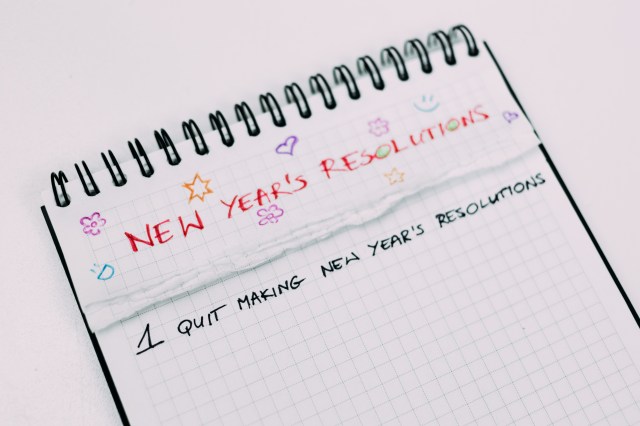
Stop Having New Year’s Resolutions

At the beginning of January, most of us have a list of New Year’s resolutions. It feels good to start the year with all the things we would like to do differently this time.  After a few days of indulging ourselves to good food and wine, losing weight and gym memberships usually feature in the top 5 list together with the aspiration of getting a new job and that hobby we always wanted to start but never had time for it.  By the end of the month, this determination has faded. We are back to ‘our norm’ and most of the resolutions are forgotten until same time next year.

Have you ever had this experience?

I used to do exactly what I described above until 10 years ago. Then I decided to stop having New Year’s resolutions. Instead, I started having Objectives for the Year.

pexels-photo-288394.jpeg

And yes, there is a difference (subtle but significant).

According to Collins Dictionary,  if you make a New Year’s resolution, you make a decision at the beginning of a year to start doing something or to stop doing something whereas, an objective is what we are trying to achieve.  In other words,  resolutions indicate strong willingness and they are usually over-stretched goals; objectives though have the end result in mind and they are realistic.

People in the corporate world are pretty used to have objectives. They are defined after careful consideration of what is vital to achieve by the end of the year.  They represent the key priorities in order to be successful and you commit yourself in achieving them. They are usually between 3-5 (More than 5 becomes a to do list – not a priority list – and the focus gets diluted).

A similar concept can be applied to both our personal and professional life.

Going to the gym used to be a regular New Year’s resolution for me. Many friends and family had tried to convince me about the benefits of regular exercise for years with limited success. Then one day, while I was about to take a flight, a couple in their 60s sat next to me. They look neat, thin and healthy. When we landed, they had to be escorted with wheelchairs.  Then, I made a connection in my mind; I want to be fit in order to be mobile when I am old. Being fit became a priority for me at that moment. Since then it appears on every year’s Objectives. (I still don’t go to the gym – I prefer jogging. Finding the ‘what’ is usually more difficult that the ‘how’.)

A few tips in case you would like to do this exercise:

  • Think holistically; Consider having objectives about:
    • Career,
    • Relationships and
    • Self
  • Phrase them in a way that encourages you to achieve them (e.g. as broad or as specific as you want them to be)
  • It is always more fun when you do this exercise with a friend
  • Keep a copy of your objectives somewhere handy as a reminder ( I have photo of them in my phone)

Review your objectives after two or three months. If you haven’t done much on a couple of them, think again whether they are still important for you. If yes, keep them on the list and do something about them. If not, just remove them or replace them. It is important that they are still reflect your priorities and they are pragmatic.

The bottom line: Remember, it is you who decides to have these objectives in the first place because you believe they can help you become a better version of yourself. If they are important for you, you will find time to do something about them.

Korina Karampela is the founder of b4iapply. She passionately believes in empowering people to  make informed decisions about their career and their finances. She is a senior executive in the pharmaceutical industry and has an MBA from MIT Sloan. In her limited spare time, she wants to join forces with others to help everybody to be a better version of themselves. 


Posted in b4iapply, Coaching, New Year's Resolutions, Personal development, Professional development | Tagged , , | Leave a comment