How Undergraduates Can Improve their Job Prospects

Korina Karampela talks to Gary Argent – the Director of Careers at City University London – about how students can enhance their employment prospects upon graduation.

At a time when graduate unemployment rate is at record high levels, many employers struggle to recruit skilled university-leavers. What is the reason for this mismatch?

I think there are a number of reasons.  Sometimes students find it difficult to articulate their skills, and they don’t realise that employers are looking for a range of experience and competencies in the graduates they hire.  Some of this experience will come from the course, but often it is the broader experience that they have gained outside of their studies that makes a difference – so it is important to consider that as well.

The difficulties can also be on the employer side.  Some companies find it hard to know how to market their vacancies and a university campus can be a very crowded and confusing place early in the autumn term when many recruiters are looking to advertise but can struggle to stand out from the crowd.  A good careers service will help employers to overcome this challenge by helping them find the best way to be seen on their campus.

What is the most common misconception that students have about their job search?

How students can improve their job prospects while at university

“The broader experience that students gain outside of their studies makes a difference” says Gary Argent

That a 2:1 or a first is all you need.  Employers look for a whole range of skills and they want you to talk about what you have done outside of your course, as well as academically.

Part time work, internships or placements, clubs and societies, a mentor in your chosen industry and getting involved in volunteering are all great ways to build experience, and give you different examples which you can use on your CV or when you are being interviewed.

What universities can do to help undergraduates become more employable?

The Careers Service should be a hub for a whole range of activities which take place before, during and after a student’s time at university.

We provide information about graduate destinations which help pupils make informed choices about what to study.  We connect students to a range of activities that they can get involved in alongside their studies, especially during the first and second year when the course load might not be quite so heavy.

Once you have got involved in those activities, a good careers service will help you to reflect on the experience you have gained, think about how those skills are applicable to the industries you might want to work in, and prepare your “story” – so that you know how best to articulate these skills to an employer.

And, of course, we will help you connect to those employers – here at City University we have hundreds of firms on campus every year, all eager to meet our students and hear their stories.

What are the 3 ‘Dos’ and 3 ‘Don’ts’ university students who want to improve their job prospects upon graduation need to be aware of?

The Do’s are:

  1. Do make sure you come and meet your careers service early when you have more time to act on the advice we will give you. 
  2. Do take the time to get involved in lots of extra-curricular activities alongside your studies. 
  3. Do try to think about things from the employer’s perspective before you meet them.  If you can appreciate how you (as a potential future employee) look from their standpoint you can make sure you present yourself in the best possible way to catch their attention.

The Don’ts are:

  1. Don’t assume that a good degree grade is all you need – it is just the first step to catch the recruiter’s eye. 
  2. Don’t put off your career search until your final year – you’ll have too much on your plate by then with lots of study deadlines, and your fellow students will have a head start on you as well.  
  3. Don’t assume that there are no jobs out there – they are, you just to have to work hard to find them.  And that is where a great careers service can help you.

The bottom line: Employers are looking for a range of skills. Undergraduates who want to improve their job prospects need to get involved in many other activities than simply being good academically.

Korina Karampela is the founder of b4iapply, coach and speaker. She is the author of “b4iapply to uni” and “b4iapply to college“. She has worked as senior pharmaceutical executive for 12 years and has an MBA from MIT Sloan. Her blog b4iapply is recommended by The Guardian for professional development.

Posted in b4iapply for a job, Career Advice, Job search | Tagged , | Leave a comment

Apprenticeships: Should We Value Them More Highly?

Korina Karampela talks to David Way – Executive Director of National Apprenticeship Service – about the value of apprenticeships.

  • An increasing number of school leavers consider doing an apprenticeship. What are the reasons behind this trend?

Apprenticeships appeal to young people because they can earn while they learn in a real job, while gaining a real qualification.  With apprenticeships available at three different levels and across a range of different industries, young people’s options have been significantly expanded.

Evidence shows that apprenticeships lead to great future prospects. Recent research among employers has found that qualified apprentices are considered to be significantly more employable than those who have taken another route into employment. Doing an apprenticeship also significantly increases a person’s lifetime earning potential.

  •  If you were able to make one change to improve the quality of the apprenticeships offered, what would it be?

    Apprenticeships

    “Apprenticeships appeal to young people because they can earn while they learn” says David Way

Apprenticeships are already high quality and lead to nationally recognised qualifications. However, we are always looking for ways to improve the options available to young people.

Higher Apprenticeships are a good example of how we are achieving this – these apprenticeships are equivalent to a foundation degree, and we are continually expanding the range of them on offer. With a Higher Apprenticeship, a young person can work their way up to a degree, gaining specialised and advanced skills, while earning a wage.

The government has also announced plans to extend apprenticeships to offer even more advanced options – in future, apprentices will be able to work their way up to Bachelor’s and Master’s Degree level. I believe this will be key to ensuring the continued growth of apprenticeships.

  • What is the most common misconception that people have about apprenticeships?

When people think of an apprentice, they perhaps picture a mechanic or an engineer, and therefore have quite a narrow idea of what doing an apprenticeship means. Whereas the truth is that apprenticeships cover a wealth of subjects and job types.

Currently, more than 100,000 employers in England offer apprenticeships in over 170 industries and 1500 different job roles. As well as traditional industries such as engineering, apprenticeships are available in areas such as marketing, business, accountancy, veterinary nursing, community arts, hospitality and catering, child care – whatever a person’s interests or skill level, there is likely to be an apprenticeship to suit them.

There can also be a misconception that doing an apprenticeship is second best to taking the traditional academic route to university, but with Higher Apprenticeships on offer that is absolutely not the case.

  • What are the 3 ‘Dos’ and 3 ‘Don’ts’ young people who consider doing an apprenticeship need to be aware of?

The Dos are:

  1. Do use the Apprenticeship vacancies website to search and apply for apprenticeships. There are up to 17,000 vacancies available at any one time, and it’s simple to create an account, set your preferences, search and apply. You can also use the new AV Search app for iPhone and Android.
  2. Do find out more about the employer and job before applying for an apprenticeship. This will help you prepare your application and feel sure the vacancy fits what you want to do.
  3. Do clearly identify your skills and interests clearly when applying – do not assume the employer can read between the lines. Make sure your application is professionally written, and allow your personality to come out.

The Don’ts are:

  1. Don’t use the same CV and covering letter for each vacancy. Tailor each application so that you emphasise the skills that the particular employer is looking for and how yours fit their specific needs.
  2. Don’t just send in an application and then forget about it – be proactive and follow it up with a phone call, to make sure that your CV is top of the pile.
  3. Don’t give up! Apprenticeships are sought-after, so expect some competition. If you don’t get onto an apprenticeship with your first try, keep putting in your best applications and you’ll eventually find one that’s right for you.

The bottom line: There are many good options available to young people if they don’t want to follow the traditional university route. An apprenticeship is an alternative way to gain a qualification while they earn a wage at the same time.

Korina Karampela is the founder of b4iapply, coach and speaker. She is the author of “b4iapply to uni” and “b4iapply to college“. She has worked as senior pharmaceutical executive for 12 years and has an MBA from MIT Sloan. Her blog b4iapply is recommended by The Guardian for professional development.
Posted in Career Advice, Link education with career, Professional development | Tagged , , | Leave a comment

Higher Education: Let’s Face the Facts

Here’s the paradox. On the one hand, young graduates can’t find jobs. On the other, employers complain that they can’t find candidates with the necessary entry-level skills.

At the same time, tuition fees have increased considerably at both sides of the pond and graduate unemployment is at record highs. The outcome?

Students end up with a university degree (most of them),  a significant debt (almost all of them), and the painful realization that their degree may have limited employment prospects (many of them).

Nevertheless, the advice we continue to give to pupils is the same as the one we received ourselves 20 years ago; get a university degree if you want to be better off.

When the topic of employability is raised, many oppose to the notion of connecting higher education with career advancement although there are subjects that suffer from overabundance of young graduates (Supply far exceeds demand so unemployment rates are high).

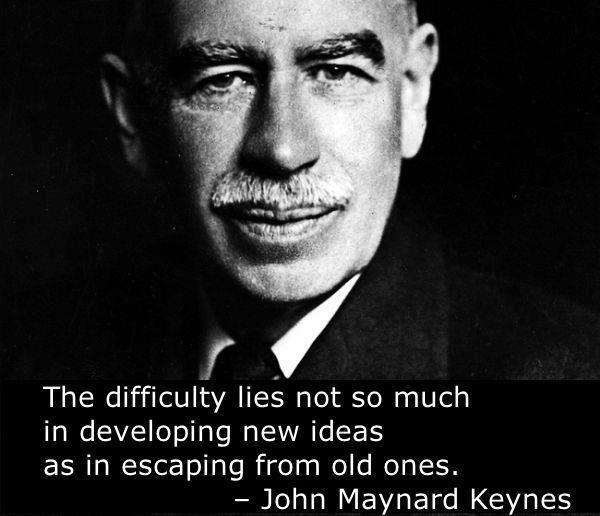
What worked well in the past cannot help us prepare for the future. The most basic task is to question our own assumptions and assess whether these widely-held beliefs are still justified. “When the facts change, I change my mind,”John Maynard Keynes (1883-1946) said.  “What do you do, Sir?” 

The facts about higher education have changed;Higher Education: Let's face the facts

  • its cost has increased considerably,
  • a university degree does not guarantee a job any more,
  • job prospects vary across subjects, and
  • the quality of education on offer varies significantly.

Isn’t it about time we also change our minds?

The dilemma that most pupils face is not whether to go to university or not (although the latter might be a better option for some). The dilemma is what to study, where and how much it will cost.

Every year thousands of graduates make a painful discovery: far from taking the first step towards a great career, they’ve just wasted their time and money on the wrong degree. They wish they had done more research before they applied. They didn’t though because we didn’t encourage them.

The world is changing rapidly and new challenges call for new strategies. We simply cannot hang on to the nostalgia of our university experiences. It might have been an ideal place for us to discover ourselves but now this benefit comes with a considerable price tag.

Pupils need to invest their time in finding a career path that suits their strengths and interests and then study a relevant degree. In this way,  they will be able to take advantage of the university resources to become truly great in the field they have chosen so that they can be ready to compete with the world’s best.

Our role is to empower them to evaluate their options and understand the trade-offs before they apply.

Employability is not simply only equipping yourself to get a job. It is about choosing a career you are passionate about and you can excel in. Being practical doesn’t mean forgetting about passion – it’s all about combining the two and equipping yourself for work you’ll love.

Korina Karampela is the founder of b4iapply, coach and speaker. She is the author of “b4iapply to uni” and “b4iapply to college“. She has worked as senior pharmaceutical executive for 12 years and has an MBA from MIT Sloan. Her blog b4iapply is recommended by The Guardian for professional development.

Posted in b4iapply to college, b4iapply to uni, Before I apply, Higher Education | Tagged , , , , , | 2 Comments

University Isn’t Right for Everyone

Korina Karampela talks to Rachel Johnson – the General Manager of notgoingtouni.co.uk – about what options are available to those who don’t think the university route is the right one for them.

  • The number of pupils who has second thoughts about going to university is on the rise. What other options do they have?

There are some fantastic options out there including apprenticeships, sponsored degrees, foundation degrees, diplomas, national vocational qualifications (NVQs), gap years, volunteering, distance learning or even going straight into entry level jobs.

  • What is the most common misconception that people have about these alternative routes?
University isn't the right option for everyone

“There are some fantastic options out there, if you don’t want to go to uni” says Rachel Johnson

I think a lot of people – pupils, parents and teachers – think that particularly apprenticeships are only for those who can’t get the grades to get into university. In fact, higher apprenticeships are an equivalent to a degree qualification – you are simply getting there via a different route. Large blue chip employers in particular are beginning to recognize the need to acquire the talent of the future both at a school leaver level as well as graduates because they see more students look for other options than the university route due to fees and unemployment rates. The number of new school leaver specific programmes is increasing all the time.

  • If you were able to make one change to improve the quality of careers advice and guidance at schools, what would it be?

I’d like to see schools focusing on helping pupils to find what route suits them best to fulfill their career aspirations instead of focusing on achieving their targets on getting pupils to university even when it is not the right option for them. For this change to happen, schools need to get aware of what alternative options are available and unfortunately this knowledge varies across schools.

  • What are 3 ‘Dos’ and 3 ‘Don’ts’ young people who are uncertain about going to university need to be aware of?

The Do’s are:

  1. Do as much research as possible into all your options. You can find a lot of information at the notgoingtouni website.
  2. Do ask yourself the following questions: a) What do you enjoy doing? b) What career would you like to have? c) Is full-time education for you? d) Is the cost of university worth it? e) Are there alternative ways that will enable you to achieve your career objectives?
  3. Do use the people around you for advice. Bounce ideas with friends, parents and teachers. Remember though that this is ultimately your decision.

The Don’ts are:

  1. Don’t be swayed in your decision by peer pressure – it’s your life and you need to base your decision on what will give you the most successful outcome.
  2. Don’t take the easy option unless it is the right one for you.
  3. Don’t wait until the last minute to apply for the route you want.

The bottom line: University is not the right option for everybody. If it is not for you, don’t despair. There are other options available to help you achieve your career aspirations. Explore them.

Korina Karampela is the founder of b4iapply, author of 2 books, consultant and speaker. She has worked in senior positions in the pharmaceutical industry for 12 years and has an MBA from MIT Sloan. Her b4iapply blog is recommended by The Guardian for professional development.
Posted in Before I apply, Career Advice | Tagged , , | 2 Comments

What Does Your Handshake Say About You?

Do you remember the last time you shook hands with somebody who had a very weak grip? What did you think about this person? Would you hire him? Would you feel comfortable to do business with him?

A lifeless handshake is usually interpreted as a sign of passivity, insecurity or even disrespect. A bone-crushing one doesn’t get positive points either.  In general, a warm and firm handshake helps establish trust between yourself and the other individual.

Do you know how others perceive your handshake?

Really, have you ever thought how you come across to others especially when you meet them for the first time?

No news is not always good news. Don’t expect the people whom you just met to tell you if there is something wrong with it. At the same time, even the people who know you well may be reluctant to break the news to you in case they hurt your feelings.

So, what can you do?

The best way is to practice your handshake with your friends and colleagues. Ask them whether it is too strong, too light or just fine. In this way you will be able to deliver a positive impression every time.

Here are some tips:

  • Stand up when you shake hands. If you stay seated, it diminishes your presence.
  • Be prepared to offer your hand first. It shows confidence.
  • Use your right hand, keep your palm vertical and match the other person’s grip. This allows your handshake to be on an equal basis.
  • Match the other’s person pressure. Remember though: it is not a power contest.
  • Make sure your palm is dry and warm. This is highly important. Nobody wants to hold a sweaty or cold hand.
  • Have plenty of eye contact and smile when you shake hands.
  • Know when to let go. If you remove your hand too early or keep it for too long, it may end up creating an awkward moment. Three seconds is usually ideal.

The bottom line: Your handshake says a lot about you. Make sure it conveys the messages you want. The best way to achieve this is to practice with your friends and colleagues.

Korina Karampela is the founder of b4iapply, author of 2 books, consultant and speaker. She has worked in senior positions in the pharmaceutical industry for 12 years and has an MBA from MIT Sloan. Her b4iapply blog is recommended by The Guardian for professional development.

Posted in Career Advice, Personal development, Professional development | Tagged , , | 2 Comments