You can’t do it alone: 5 tips for successful mentoring relationships

Before you apply to university, you need to have a career in mind that fits your strengths and interests. Mentors can provide you a lot of support during this process. Mentors are experienced people who are happy to share their knowledge to help others develop.

In a business setting, it is common practice to match high potential employees with experienced people in the company. It will be very useful to replicate this initiative at a school setting formally or informally.

Students will benefit from having a mentor for the following reasons:

  • Exposure to external perspectives and ideas
  • Access to a support system during career development
  • Ability to establish and maintain professional networks
  • Access to constructive feedback
  • Insider’s knowledge of a specific career path

I believe in chemistry between people. I expect students to initiate meetings with many people and then choose the one with whom there is a good connection.

Here are 5 tips so you can get the maximum out of these mentoring relationships:

  1. Take responsibility of putting together the agenda of every meeting.  You are the host, not the guest.
  2. At the beginning of the relationship, discuss and agree goals and objectives.
  3. Pencil meetings in advance (once a month).  If it is possible to have face to face, it is great. During busy periods, a phone conversation is a good alternative.
  4. Be punctual and prepared for the meetings.
  5. Actively request information or advice on specific issues. Respect his/her opinions, even if you don’t agree with them.

Even if it is not a mentoring relationship with the strict definition of the term, just having access to somebody in a sector you are interested will be helpful. A short discussion over the phone may have a significant impact on your decision-making.

Always remember that your mentor (s) volunteered for this role. Express your appreciation to the mentor’s willingness to help. Simple things like a thank-you note after receiving some information might go a long way.

Before you apply to university, you need to do a lot of research. You can’t do it alone. Engage others in the process. Get a mentor and follow the tips above to make the mentoring relationship successful.

Korina Karampela is the author of ‘b4iapply to college‘ and ‘b4iapply to uni‘ books. Her b4iapply blog is recommended by The Guardian for professional development. She is a former pharmaceutical executive and has an MBA from MIT Sloan.

Posted in b4iapply to college, b4iapply to uni, Before I apply, Career Advice | Tagged , , , , , , | Leave a comment

The Six Essential Elements to Consider Before You Apply to College

You have invested a lot of time discussing what to study with family and friends and researching online.

Here are the Six Essential Elements you need to consider before you apply.

  1. Study a subject that will help you get your dream job. You really don’t want to end up with a big loan and a job that you don’t enjoy.
  2. Make sure you choose a career where your natural strengths are used. In this way, you will enjoy what you will be doing and you will be great at it.
  3. Talk to people in the sector you are interested in having a career. It is only by talking to people you will understand what the job really entails, what the things that you need to check are, what challenges you may face.
  4. If you are passionate about a subject, go for it.
  5. If you are not passionate about a specific area, study a subject that will increase your employability.
  6. Take responsibility for your future. You will be the one who will bear the implications of this decision.

The bottom line: whatever you decide to study, you need to become an expert on it if you want to stand out from the crowd.

Korina Karampela is the founder of b4iapply, author of 2 books, consultant and speaker.

Posted in b4iapply to college, b4iapply to uni, Before I apply, Higher Education, Link education with career | Tagged , , , , , , | Leave a comment

How to avoid the most common mistake university applicants make

Before you apply, make sure that you avoid the most common mistake that university applicants make.

Most students do a lot of research online to find what the best course for them is, speak to universities, invest a lot of time in refining their application. They forget though to do the most important step. They don’t take the time to talk to people who are currently in the professions they consider.

Talk to as many people as possible about their jobs. 

Talk to as many people you can

Talk to:

  • Your family members
  • The friends/colleagues of your parents
  • The parents of your friends
  • Your mentors (if you have any)

If, for example, you consider becoming a teacher, you definitely need to speak to a teacher and understand how a typical day is, what skills are necessary, and how the profession may change in the future. If you want to become an engineer, speak to an engineer. Not only one but as many as possible.

It is only by talking to people you will understand what the job really entails, what are the things that you need to check, what challenges you may face.

If you don’t know people in the professions you are interested in, ask your social network to introduce you to people they may know.

People are willing to share their learnings. Just be polite and respectful of their opinion (this doesn’t mean that you have to agree with them) and their time.

Be on a mission. Talk to people you know about their jobs, ask them questions about the good, the bad and the ugly. Find out their opinions about the future of their profession. In this way, you will avoid the most common mistake university applicants make.

Korina Karampela is the author of b4iapply to college and b4iapply to uni

Posted in b4iapply to college, b4iapply to uni, Before I apply, Career Advice, Higher Education, What to study | Tagged , , , | 2 Comments

What to study and where to study: how to get good value for your money

A university degree is not a passport to a fast-track career anymore. To optimize the return of your investment, you need to be selective about what you study and where. It is important you understand the trade-offs of your decision before you apply.

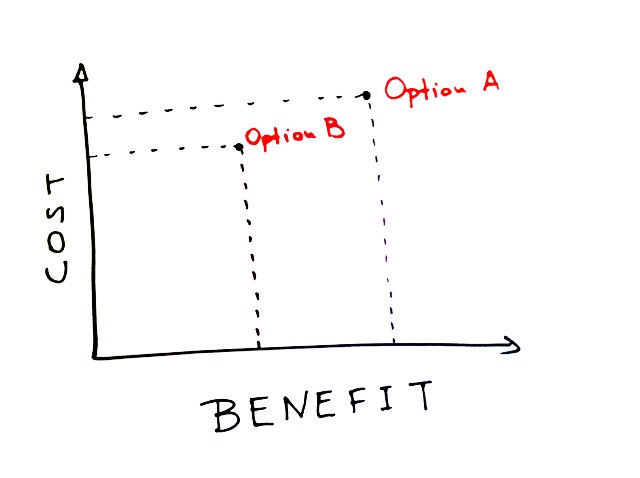
Although it is important to think of ways to minimize the cost of your education, it is also crucial to maximize the benefits you get out of it.

Think of the costs and the benefits of your possible options

A) How do you minimize the costs of your education?

This is relatively straight forward.

  • Check tuition fees for various universities. Insight: make sure the quality of the course you choose is not jeopardized.
  • Reduce living expenses (e.g. living with your parents while studying)
  • Explore scholarships and other benefits (e.g. bursaries, fee-waivers, etc)

B) How do you maximize the benefits you get?

This is a much more difficult question to answer. There are a number of factors you need to consider:

  1. Find out what the long-term prospects of the sector you are interested in are.
  2. Check which types of jobs are in demand in that sector.
  3. Get a degree with a specialization.
  •  Find out what employers are looking for in the career path you want to follow (e.g. do they prefer a degree from a reputable university or is the specialized knowledge that matters?) Insight: speak to friends of you parents or anybody else you know in the area you are interested in.

Also,

  • check which universities:
  1. provide high quality courses in the subject you want to study (league tables by subject can be found at the Complete University Guide).
  2. prepare you for your work-life (Do they offer advice on presentation skills, CV writing, interviewing skills, etc. Do they have strong links with employers and/or support you to find the right internship/work placement for you?) Insight: I strongly advise you to contact the university for details before you apply.

Remember, there is significant variation in performance among universities. Make sure that you do your research to find out which one is worth your investment.

Don’t count only on the information you get from the universities themselves. Find out what employers’ perception is about them.

The bottom line: There is always a trade-off between cost and quality of offering. You better understand the consequences of the trade-offs before you apply. Be selective of what you study and where you study. Do your research to make sure you get good value for your money.

Korina Karampela is the author of b4iapply to college and b4iapply to uni

Posted in b4iapply to college, b4iapply to uni, Before I apply, Higher Education, Value for money, What to study | Tagged , , , , | 6 Comments

Tips for acing university interviews

The best way to increase the possibility of a successful outcome of interviews  is to be prepared.

Here are some tips:

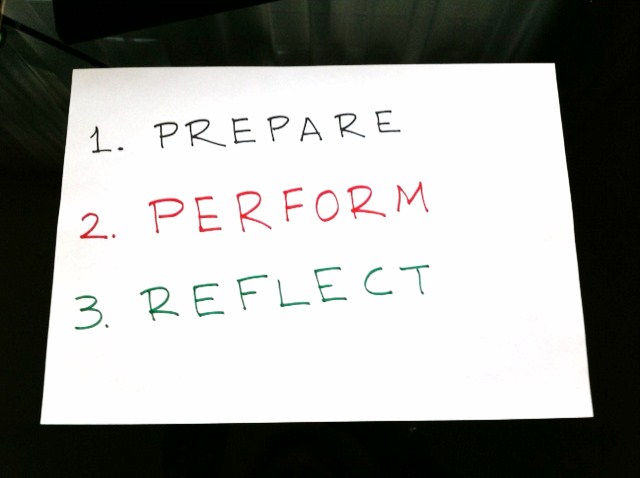
3 steps for acing interviews

Before the interview: PREPARE

  • Find out from the university website what the structure of the interview is. Speak to students from previous years, if possible. There is a lot of information online. If you need to do a test, practise beforehand.
  • Re-read your application (especially the personal statement) and any written work you have submitted. Get copies with you.
  • Think of possible questions  (e.g. why did you apply to this course?) and write down a couple of bullet points for each. Rehearse, rehearse and rehearse. This practice will help you to formulate clear and concise answers.
  • Prepare a few questions to ask the interviewer. If you can find the answer at their website, it’s probably not a good one.
  • Have a mock interview with a teacher/mentor. Do it in a professional and serious way.
  • Read what’s hot around your chosen subject.
  • Some logistics: Dress smartly, arrive early and familiarize yourself with the environment. Switch off your mobile. Get a bottle of water with you as well. Stress can lead to a dry mouth.

During the interview: PERFORM

  • Relax and be yourself. Don’t try to pretend to be somebody you are not.
  • Be enthusiastic. The interviewer wants to find out how motivated you are.
  • Watch your body language. Sit up straight and lean slightly forward. Establish eye contact (but don’t stare) and smile occasionally.
  • Expect anything. Most of the times the interviewer wants to push you to think on your feet. Stay calm and focused.
  • Take your time to answer the questions. If there is anything you don’t understand, ask for clarification.
  • Explain your thought process. In most cases, there are no right or wrong answers. The interviewer wants to understand how you respond to new ideas. Think out loud.
  • If you get a direction, listen carefully and respond positively.
  • Don’t give up. Remain calm, even if you feel that it’s not going well. You may be surprised by the end result.

After the interview: REFLECT

  • Don’t start celebrating, if it went well or crying, if it didn’t. Remember that your interview starts from the minute you arrive in the campus and finishes when you leave it. Behave appropriately all the time.
  • Think what you’ve learned from the process. What worked well and what you need to do differently next time.
  • Don’t spend your time thinking whether you will be accepted or not. No need to waste your brain power on hypothetical arguments. When you get an offer, you can think about this.
  • If the university had asked you to interview for another subject, think carefully whether this is the career you are looking for. Universities will do what is best for them (fill the place they have with the best candidates possible) and you need to do what is best for you.

Also, remember interviews are a two-way process. They evaluate your suitability with the course. You also need to assess whether you want to invest a few years of your life with them.

So, take advantage of the opportunity of being there and speak to other students, teachers, career office staff. Also, explore the campus, go to the city, get a feel of how it is to live there. When the time comes for you to make the decision, you will have all the information needed.

It seems like a long list of things to do. The best analogy is to think yourself as an athlete. Success will depend on your performance on the day. You increase your chances significantly though, if you get prepared.

Follow the tips above and you will be ready to go!

Korina Karampela is the author of b4iapply to college and b4iapply to uni

Posted in b4iapply to college, b4iapply to uni, Career Advice, Higher Education, Interviews | Tagged , , , , , | Leave a comment